

 On April 15, 1865, the United States awoke to devastating news: President Abraham Lincoln was dead. Just days after General Robert E. Lee’s surrender at Appomattox signaled that the Civil War was drawing to a close, the nation lost the leader who had guided it through its darkest and most divided years.
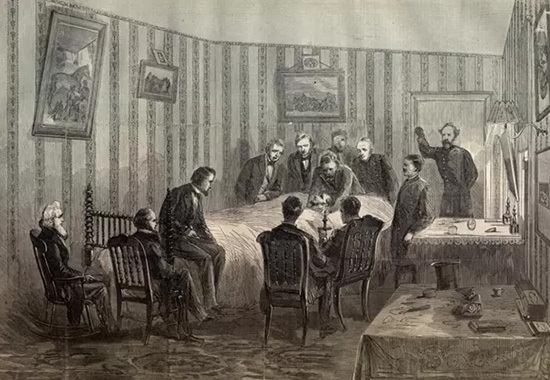
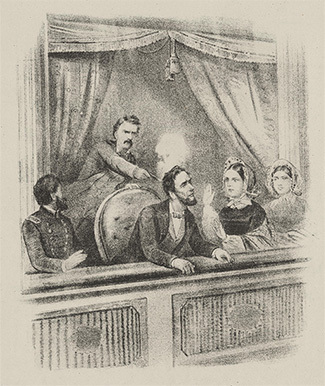
Lincoln was shot on the evening of April 14 while attending a play at Ford’s Theatre in Washington, D.C. The assassin, John Wilkes Booth, entered the presidential box and fired a single shot into the back of Lincoln’s head. Doctors carried the wounded president across the street to the Petersen House, where he died the following morning at 7:22 a.m. on April 15.
The shock was immediate and profound. For many Americans, Lincoln had become the symbol of Union, perseverance, and moral resolve. He had led the nation through civil war, defended the Union against dissolution, and, through the Emancipation Proclamation, helped redefine the war as a struggle not only for national survival but also for human freedom.
Lincoln’s death came at a moment when the country desperately needed steady leadership. The war was effectively ending, but the hard work of reunification and reconstruction was only beginning. His assassination turned a moment that should have been marked by relief and hope into one of grief, uncertainty, and national trauma.
What made Lincoln’s death especially tragic was the timing. After four years of sacrifice, bloodshed, and hardship, the country stood on the edge of peace. Lincoln had delivered his Second Inaugural Address only weeks earlier, calling for reconciliation “with malice toward none, with charity for all.” His vision for healing the nation was cut short before it could be fully tested.
The anniversary of Lincoln’s death is more than a date in history. It is a reminder of the cost of preserving the Union and of the weight carried by leaders in moments of national crisis. Lincoln’s life and death remain central to the American story because they speak to the nation’s deepest struggles over liberty, sacrifice, unity, and justice.
Remembering April 15, 1865, means remembering more than an assassination. It means remembering the loss of a president whose leadership shaped the course of the Civil War and whose words still define some of the highest ideals of the United States.