


We the People | March 27, 1794
America had won its independence.
Its ships were still vulnerable.
Merchant ships seized. Sailors held for ransom. A young nation forced to decide how it would protect its trade.


A Country Without Warships
By 1785, the financially strained United States had sold its last Continental Navy warship. Independence had been secured, but American commerce still depended on ocean routes the country could no longer defend with a national fleet.
The Navy’s first beginning came during the Revolution, when Congress authorized two armed vessels on October 13, 1775. We tell that earlier story in Two Ships Against an Empire. The decision in 1794 was about rebuilding a naval force for an independent country.
Barbary corsairs operating from North Africa, especially Algiers, captured American merchant vessels and held crews for ransom. Protecting trade became a question Congress could no longer put off.
Pay—or Build a Fleet?
A navy was expensive. Opponents worried about debt and the power of a standing military. Supporters argued that relying on ransom and tribute left American trade at the mercy of foreign governments.
On March 27, 1794, President George Washington signed the Naval Act, authorizing six frigates. The measure committed the country to building warships, recruiting crews and creating the means to protect its commerce.
Six Ships. A Different Strategy.
Naval architect Joshua Humphreys helped shape the new fleet. The United States could not build enough ships to match Europe’s great navies. Its frigates would need to make a smaller force effective.
The six ships were United States, Constellation, Constitution, Congress, Chesapeake and President. Building them took years, and the program almost stopped before any were launched.
The Ships That Followed
United States, Constellation and Constitution were launched in 1797. The other three were completed later as tensions with France renewed the need for naval protection.
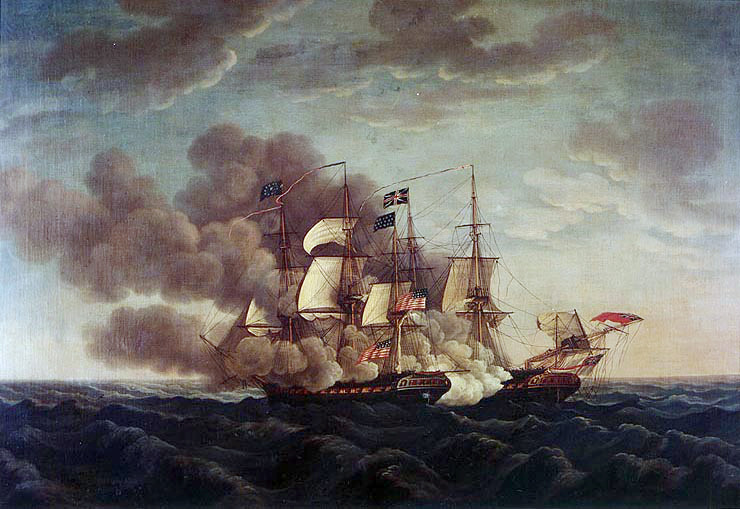

The rebuilt Navy fought in the undeclared Quasi-War with France, then in the Barbary Wars and the War of 1812. A fleet first authorized to protect commerce became a lasting part of America’s national defense.
The Constitution remains afloat today. Her survival makes the Naval Act something more tangible than a date in a history book: one of the ships it made possible is still with us.
Remembering March 27, 1794
Winning independence did not settle how America would protect itself. The Naval Act of 1794 was a decision to build that protection, one ship at a time.