


The Coast Guard Ensign: 227 Years of Authority at Sea
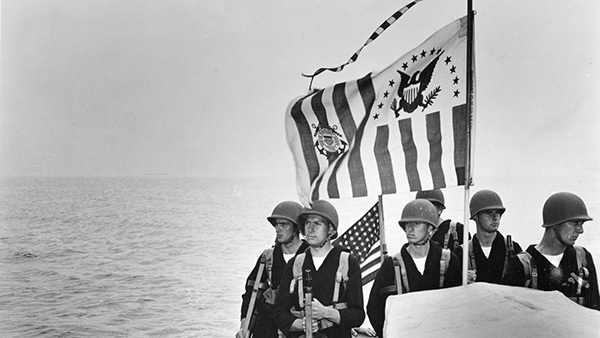
Every branch of the United States Armed Forces has a flag, but the Coast Guard has one designed for more than ceremony.
The distinctive Coast Guard ensign—with its vertical red-and-white stripes—was created to identify government vessels enforcing federal law at sea. Authorized in 1799, it is nearly as old as the Coast Guard itself.
As the United States Coast Guard celebrates its 236th birthday on August 4, 2026, the ensign provides a direct connection to the service’s earliest mission: protecting the nation’s revenue, coastline and maritime commerce.
The Beginning of the Coast Guard
The Coast Guard traces its history to August 4, 1790, when President George Washington signed legislation authorizing ten armed cutters.
The young federal government depended heavily on tariffs collected from imported goods. Smuggling threatened that revenue, so the cutters patrolled American waters, inspected ships and enforced federal trade laws.
The organization became known as the Revenue Cutter Service. In 1915, it merged with the U.S. Life-Saving Service to form the modern United States Coast Guard.
Why the Revenue Cutters Needed Their Own Flag
Early revenue cutters could be difficult to distinguish from merchant ships, naval vessels or privately owned boats.
That created a practical problem. When a cutter ordered another vessel to stop for inspection, its crew needed to know the command came from an authorized representative of the United States government.
In 1799, Congress authorized a special ensign and pennant to make federal law-enforcement vessels immediately recognizable at sea.
The original design featured 16 alternating red-and-white vertical stripes, representing the 16 states then in the Union. A white field in the upper corner displayed the arms of the United States in dark blue.
Although the nation added more states, the ensign retained its 16 stripes.
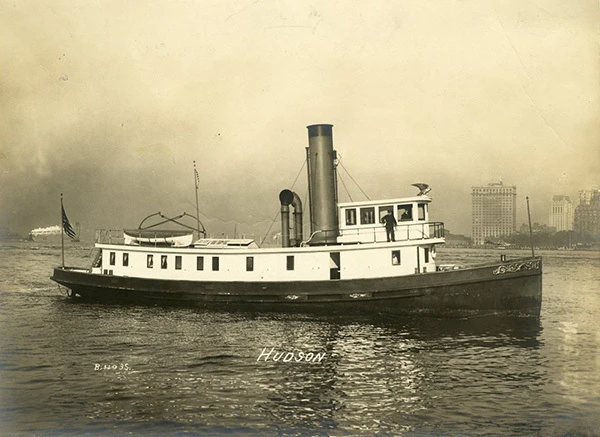
A Flag Representing Federal Authority
The Coast Guard ensign was not created primarily as a symbol of military pride. It was a working identification flag.
Its appearance communicated that the vessel displaying it had authority to enforce American maritime laws. Revenue cutters used that authority to combat smuggling, collect customs duties and protect the nation’s maritime interests.
The ensign continues to represent Coast Guard law-enforcement authority today. Coast Guard cutters display it, particularly during official law-enforcement operations.
How the Ensign Changed
Early ensigns were not produced from one standardized pattern. Treasury officials distributed written instructions, but customs offices and flag makers sometimes interpreted them differently.
The design gradually evolved through federal legislation, presidential orders and Coast Guard regulations.
In 1910, an emblem was added to distinguish the revenue cutter ensign from a similar Customs Service flag. The design was standardized more carefully in 1927 after inconsistencies became an issue during a Prohibition-era court case.
Additional changes followed during the 1950s. The present basic version was adopted in 1967 as part of the Coast Guard’s broader visual identity system, which also introduced the familiar Coast Guard racing stripe.
Despite these changes, the ensign’s defining feature remains the vertical stripes first authorized in 1799.
The Ensign Is Not the Coast Guard Service Flag
The Coast Guard ensign should not be confused with the white Coast Guard flag commonly displayed at ceremonies, military events and private homes.
The two flags serve different purposes.
The Coast Guard ensign has vertical red-and-white stripes and represents federal maritime law-enforcement authority. Its use is restricted to official purposes.
The Coast Guard service flag has a predominantly white field with Coast Guard imagery. It is used for ceremonies, parades and public recognition of the service.
The Coast Guard flags displayed by veterans, families and supporters are therefore not the same as the law-enforcement ensign carried by official vessels.
The Coast Guard Today
The Coast Guard’s responsibilities have expanded considerably since the first ten cutters began patrolling American waters.
Today, its missions include:
- Search and rescue
- Port and waterway security
- Drug and migrant interdiction
- Maritime law enforcement
- Marine safety
- Environmental protection
- Aids to navigation
- Ice operations
- Defense readiness
The Coast Guard remains both an armed service and a federal law-enforcement agency. Its crews save people in distress, protect ports, inspect vessels, maintain navigation systems and support national defense operations.
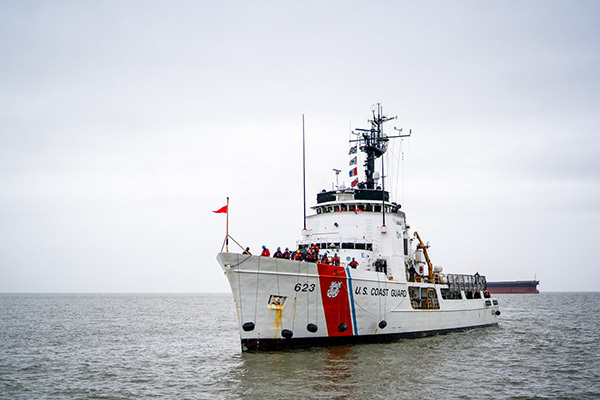
A Flag With a Job to Do
Many historic American flags were created to represent a movement, military unit or moment in the nation’s development.
The Coast Guard ensign was created to establish authority.
For 227 years, its vertical stripes have identified vessels and crews empowered to enforce American law at sea. The equipment and responsibilities of the Coast Guard have changed dramatically since 1799, but the ensign still communicates essentially the same message:
This is a vessel of the United States Coast Guard, operating under the authority of the United States.
As we recognize the Coast Guard’s 236th birthday on August 4, we honor the generations of Coast Guard members who have protected the nation’s people, ports, waterways and maritime interests.
Honor the United States Coast Guard
Recognize Coast Guard members, veterans and their families with a U.S. Coast Guard flag.
Explore our complete selection of military flags and durable, American-made United States flags.