


Most Americans picture the Declaration of Independence being approved and signed during one dramatic gathering on July 4, 1776. Delegates assemble in Philadelphia, adopt the document and line up beneath John Hancock’s enormous signature.
That familiar scene never happened.
Congress adopted the Declaration’s final wording on July 4. The famous handwritten parchment displayed at the National Archives was prepared later, and most of its signatures were added on August 2, 1776.
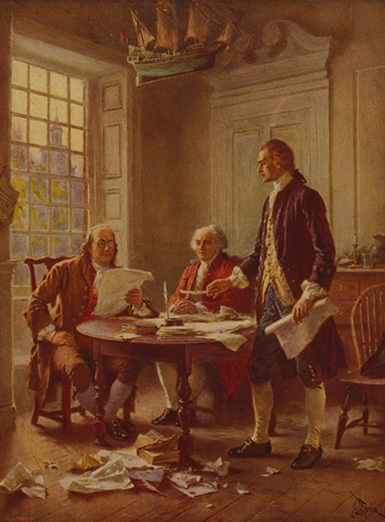
This 19th-century depiction helped reinforce the popular belief that the Declaration was signed on July 4. Most delegates actually signed the official parchment on August 2.
Independence Happened in Stages
The process began on July 2, when Congress approved Richard Henry Lee’s resolution declaring the colonies “free and independent states.” John Adams believed July 2 would become the great American anniversary, celebrated with parades, bells and fireworks.
Congress then spent two more days revising the explanation drafted primarily by Thomas Jefferson. The final language was adopted on July 4 and sent to Philadelphia printer John Dunlap.
Dunlap produced printed copies that were distributed to state governments, military commanders and the public. These early copies carried only the names of John Hancock, president of Congress, and congressional secretary Charles Thomson. The version covered with 56 signatures did not yet exist.
On July 19, Congress ordered an official copy to be “fairly engrossed on parchment.” Engrossing meant carefully writing the document in a large, formal hand. The work is generally credited to Timothy Matlack, an accomplished penman who copied the Declaration onto a single sheet of parchment.
That document was presented for signing on August 2. Hancock signed first, followed by most of the delegates. Several absent members added their names later, eventually bringing the total to 56.
The American Flag Came Later
The signing also occurred before the Stars and Stripes became America’s official flag.
During the early Revolution, American forces used several different banners. One of the most prominent was the Continental Colors, also called the Grand Union Flag. It had 13 alternating red and white stripes but still displayed the British Union in its canton.
Congress did not adopt the familiar design of 13 stripes and 13 white stars on a blue field until June 14, 1777—more than ten months after the Declaration’s main signing. Paintings showing the delegates signing beneath a 13-star American flag are therefore historically questionable.
The Declaration’s real timeline:
July 2, 1776: Congress voted for independence.
July 4, 1776: Congress adopted the Declaration.
August 2, 1776: Most delegates signed the parchment.
June 14, 1777: Congress adopted the Stars and Stripes.
None of this means Independence Day is celebrated on the wrong date. July 4 marks the adoption of the words that formally announced America’s separation from Britain. August 2 marks the day most delegates placed their names on the parchment that survives today.
On August 2, 2026, America marks 250 years since most of the founders signed their names—and publicly tied their lives and reputations to the new nation they were creating.