


We the People History Series
What Was D-Day?
For many Americans, D-Day stands among the most significant days in U.S. history.
On June 6, 1944, Allied forces crossed the English Channel and landed on the beaches of Normandy, France, beginning a massive effort to liberate Nazi-occupied Western Europe. The operation required extraordinary planning, courage, and sacrifice; and its success helped open the path toward the eventual defeat of Nazi Germany.
Why Normandy?
The Normandy coastline mattered because it gave the Allies a realistic place to get back onto mainland Europe and begin pushing Nazi Germany from the west.
Germany controlled much of Western Europe.
By 1944, the Allies needed to cross the English Channel and open a major front in France. Without a successful landing, they could not move large armies, vehicles, tanks, fuel, and supplies into Europe.
Normandy was close enough to England.
The English Channel was still dangerous, but Normandy was within reach for ships, landing craft, aircraft, and supply lines.
It was less expected than Pas-de-Calais.
The shortest crossing from England to France was near Calais, so Germany expected that area more strongly. The Allies used deception efforts to encourage that belief while preparing to land farther west in Normandy.
The beaches gave the Allies room.
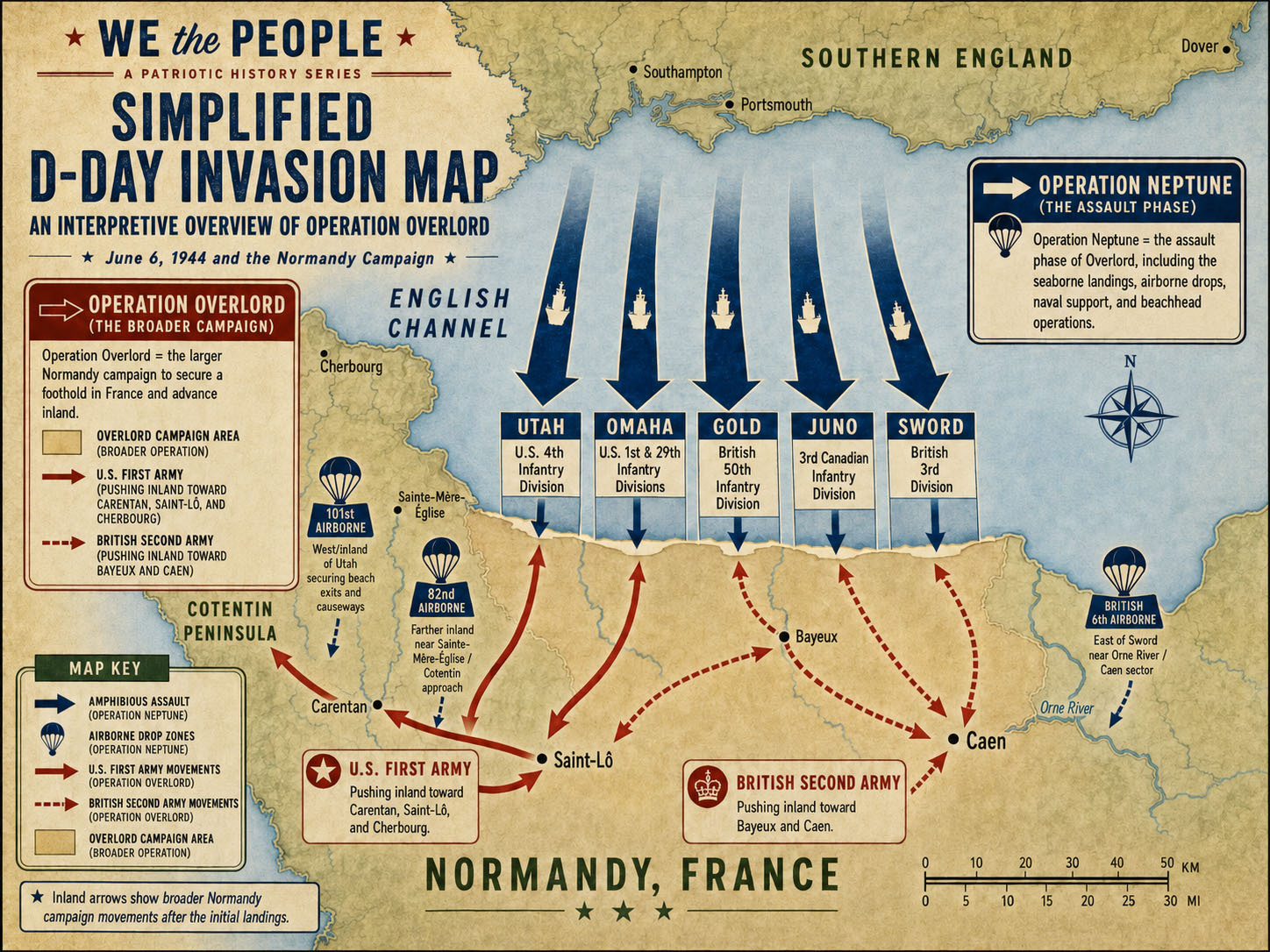
That 50-mile stretch allowed separate landing zones: Utah, Omaha, Gold, Juno, and Sword. The goal was to land enough troops across a wide front, link the beaches together, and create a beachhead making a secure foothold.
Once secured, Normandy could become a gateway into France.
After the landings, the Allies could bring in more troops and supplies, push inland, liberate French towns, and eventually move toward Paris and Germany.
“D-Day” Was Not the Operation’s Actual Name
“D-Day” was not the operation’s official name. “D-Day” was a general military term used for the day an operation was set to begin. The Normandy landings themselves were part of Operation Neptune, the assault phase of the broader Allied campaign known as Operation Overlord.
Click image to enlarge
Why this coastline mattered:
Normandy was the doorway back into Western Europe. If the Allies could cross the English Channel, secure the beaches, and build a foothold in France, they could begin the long push to liberate Nazi-occupied Europe from the west.
It Was Not Just an American Story
D-Day was not only an American story. The invasion involved Allied forces from multiple nations, including the United States, United Kingdom, Canada, and others. Naval personnel from several Allied countries also supported the operation.
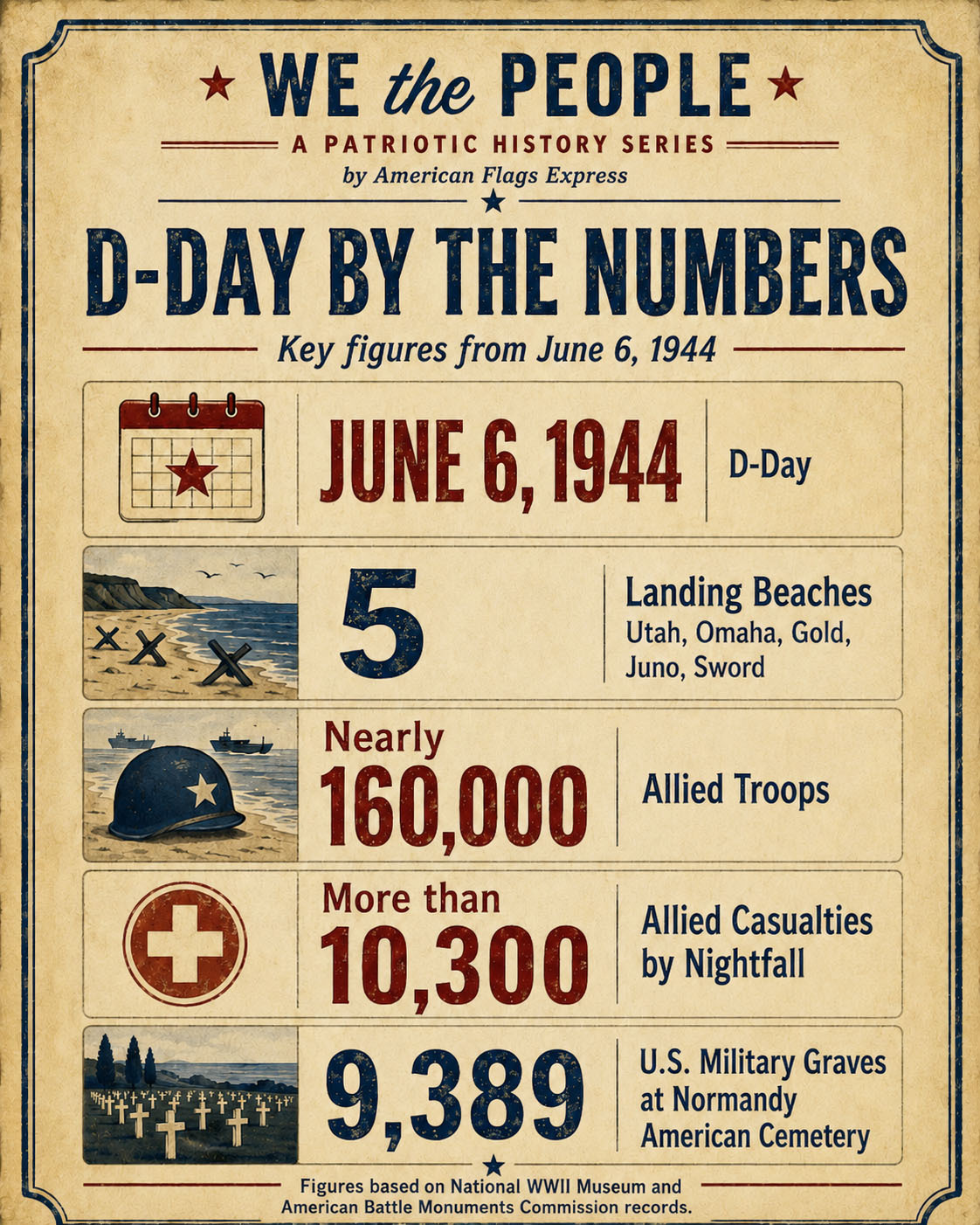
A quick look at the numbers helps show the scale of the operation, from the five landing beaches to the thousands of Allied troops who crossed the Channel.
Click image to enlarge
Click image to enlarge
The Flag They Carried Had 48 Stars
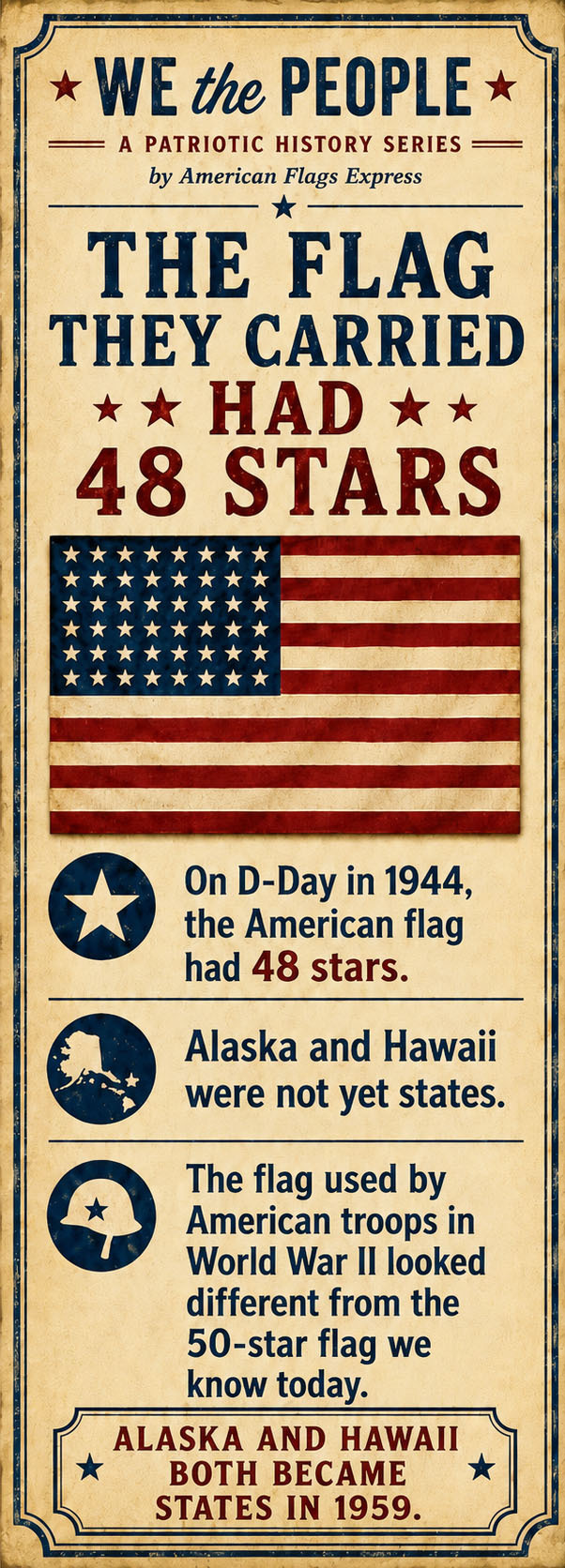
The American flag carried into World War II was not the same 50-star flag we know today. On D-Day, the United States flag had 48 stars, representing the 48 states in the Union at the time. Alaska and Hawaii would not become states until 1959.
For the soldiers, sailors, airmen, and medics who crossed the English Channel on June 6, 1944, that 48-star flag represented home, duty, and the country they were serving far from American shores.
In 1944, the U.S. flag had 48 stars. Alaska and Hawaii both became states in 1959.
The Weather Window That Changed History
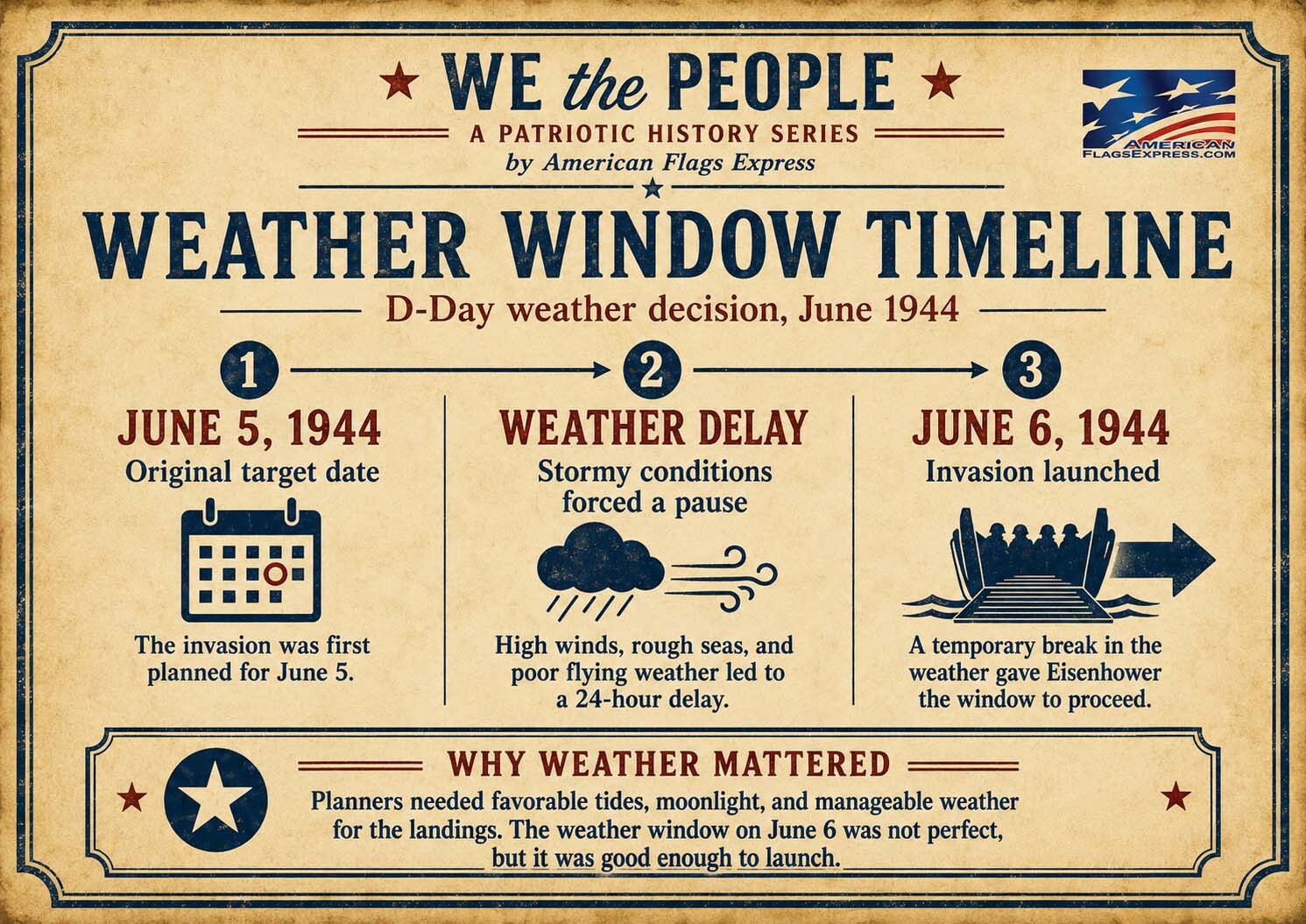
D-Day was originally planned for June 5, 1944, but stormy conditions over the English Channel forced Allied commanders to pause. The invasion required more than courage alone. Planners needed favorable tides, moonlight, manageable seas, and enough visibility for air and naval support. When forecasters predicted a temporary break in the weather, General Dwight D. Eisenhower made the decision to launch on June 6. The conditions were still far from perfect, but the narrow weather window was good enough to begin the invasion.
Click image to enlarge
Why We Still Remember
D-Day was a military operation, but it was also a human story. It reminds us how much was asked of ordinary people in an extraordinary moment, and how courage, cooperation, and sacrifice helped change the course of history.