


We the People | October 7, 1780
A threat brought them over the mountains.
A victory helped change the course of the war.
In the fall of 1780, a British officer sent a warning into the Appalachian backcountry: stop resisting the Crown, or face the destruction of your homes and the execution of your leaders.
The warning was meant to break resistance. Instead, it helped bring a fighting force together.
On October 7, Patriot militia surrounded Major Patrick Ferguson’s men on a wooded ridge in South Carolina. About an hour later, Ferguson was dead and his force defeated. The Battle of Kings Mountain gave the American cause a badly needed victory at a moment when the war in the South had been going disastrously wrong.

A Revolution in Trouble
It is easy to look back at the American Revolution as a march toward an inevitable victory. For people living through 1780, independence was anything but certain.
Charleston had fallen to the British in May. In August, another American army suffered a devastating defeat at Camden. British commanders were working to secure the South, counting on Loyalist support to help hold the territory they captured.
Ferguson’s assignment included organizing and training those Loyalists. His threat to the mountain settlements carried the war directly to people who might otherwise have stayed closer to home.
The Men Who Crossed the Mountains
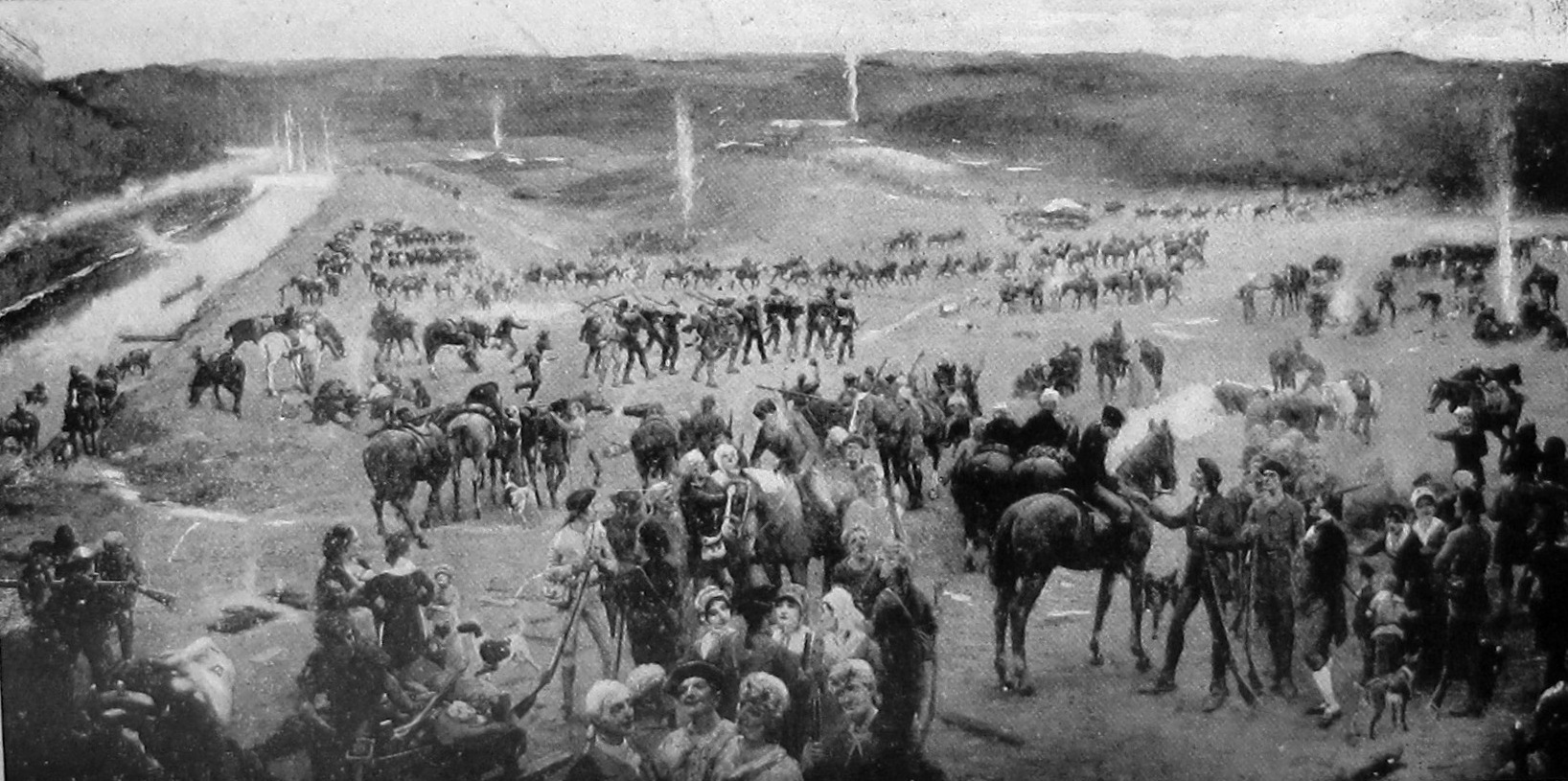
The Overmountain Men took their name from settlements west of the Appalachians, including parts of what is now Tennessee. Gathering at Sycamore Shoals, they set out across the mountains under leaders including Isaac Shelby, John Sevier and William Campbell.
Other Patriot militia joined the campaign. These were men serving outside the Continental Army’s regular ranks, bringing their own equipment and differing levels of experience. Their strength at Kings Mountain would come from coordinating their attack and using the wooded terrain.
One Ridge. About One Hour.


On the afternoon of October 7, the Patriots attacked from several directions, moving up the slopes and firing from behind trees and rocks.
The Loyalists launched bayonet charges that drove attackers downhill. But the Patriots regrouped and returned. Pressure from around the ridge gradually crowded Ferguson’s men into a shrinking defensive position.
Ferguson was killed during the fighting. His surviving command surrendered, although some Patriots continued firing before the violence could be stopped. The victory was decisive; the bitterness of the conflict did not end with it.
Why Kings Mountain Mattered
The loss disrupted British plans and helped force Cornwallis to withdraw from Charlotte into South Carolina. It also challenged the expectation that Loyalist forces could secure the backcountry.
Kings Mountain did not end the Revolution. More campaigns, more losses and more victories lay ahead. But after the disasters at Charleston and Camden, it demonstrated that British control of the South was far from settled.
That is why this comparatively small battle deserves a place in the larger American story. The people who fought there could not know how the war would end. They acted while its outcome was still uncertain.
Remembering October 7, 1780
When we fly the American flag today, we remember a nation whose independence had to be won. Kings Mountain brings that history down to human scale: a gathering, a difficult journey and a decision to fight when victory was anything but guaranteed.
Sources & further reading
National Park Service: Overmountain Victory; Kings Mountain ranger history; the Southern Campaign; Kings Mountain historical handbook. National Park Foundation: Kings Mountain National Military Park.