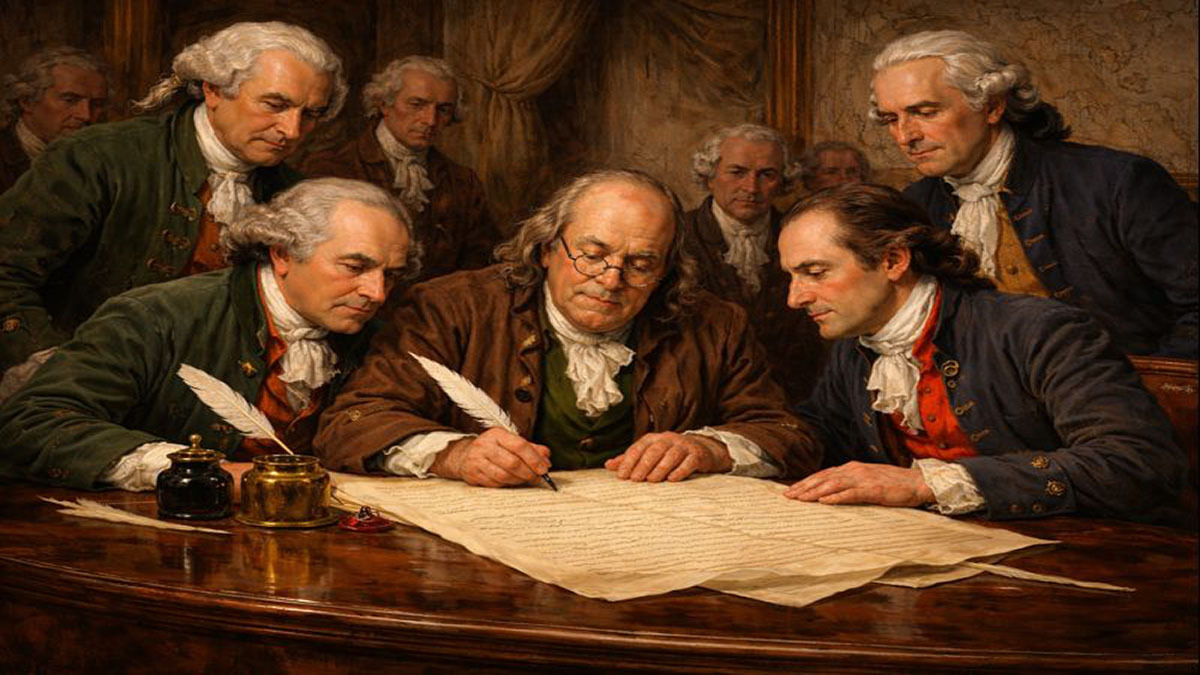


JANUARY 14, 1784 · RATIFICATION DAY
How America secured peace with Britain
Winning independence took more than a declaration. It took years of war, negotiations in Paris, and a vote in Annapolis. On January 14, 1784, Congress approved the peace treaty with Britain. Getting enough states together for that vote proved to be a challenge of its own.
Seven facts about the Treaty of Paris
- Congress approved the peace treaty on January 14, 1784.
Meeting in Annapolis, Maryland, Congress ratified the Treaty of Paris. That approval is the event remembered on Ratification Day.
- The treaty had been signed four months earlier.
American and British representatives signed it in Paris on September 3, 1783. Signing, congressional approval, and the exchange of ratifications were separate steps. The treaty entered into force on May 12, 1784.
- Britain recognized American independence.
The treaty acknowledged the thirteen states as independent and ended the Revolutionary War between the United States and Great Britain. Other countries had already recognized the United States; France did so in 1778.
- The new nation’s western boundary reached the Mississippi.
The treaty established boundaries extending west to the Mississippi River. These diplomatic boundaries did not mean the land was unoccupied or that Native nations had agreed to surrender it.
- Congress acted under the Articles of Confederation.
The United States already had a national government. Its first constitution, the Articles of Confederation, was in force from 1781 until the present Constitution took effect in 1789.
- Diplomats helped secure the peace.
John Adams, Benjamin Franklin, and John Jay signed the final treaty for the United States. David Hartley signed for Great Britain.
- Even approving peace required a struggle.
Congress needed delegates from nine states to ratify the treaty. For weeks, only seven states were represented. When two more delegations arrived, 23 members from nine states approved it unanimously on January 14, 1784.
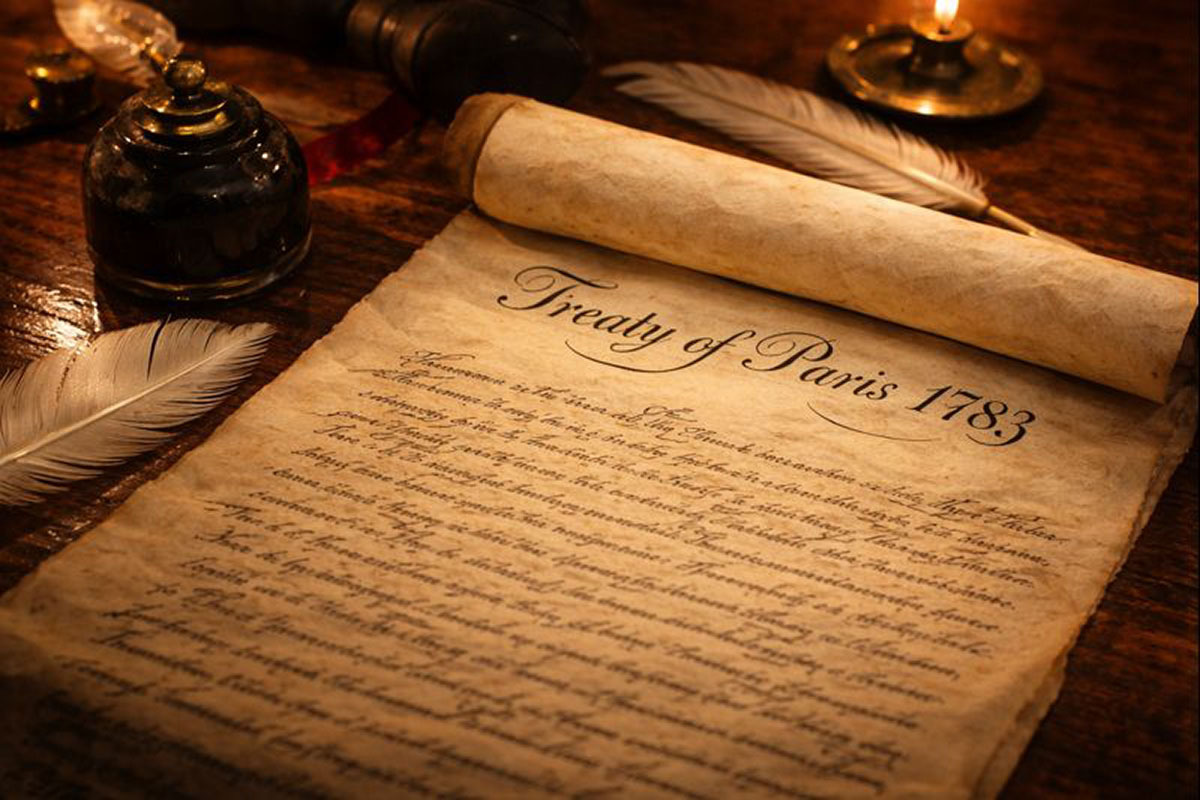
The same facts, simplified
- Congress said yes.
On January 14, 1784, Congress approved the peace treaty.
- Peace took several steps.
The treaty was signed in 1783 and entered into force in May 1784.
- Britain accepted independence.
The treaty recognized the United States as independent.
- The borders reached west.
The Mississippi River became the western boundary described in the treaty.
- America already had a government.
It operated under the Articles of Confederation.
- Diplomats signed the agreement.
Adams, Franklin, and Jay signed for the United States.
- Congress needed enough states to vote.
Delegates from nine states finally came together and approved the treaty unanimously.